BACKPRODUCT DESIGN WORKS
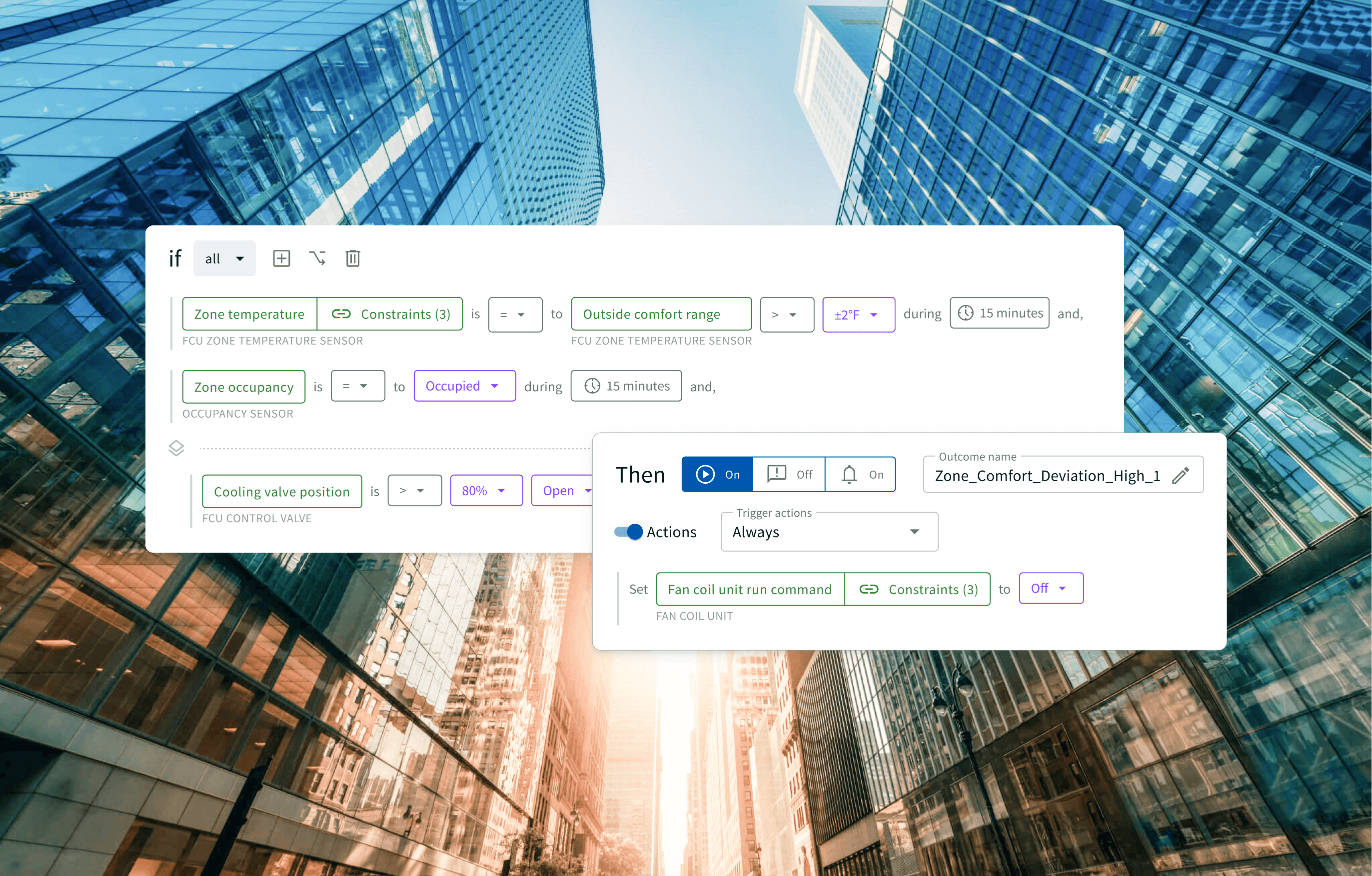
Simplifying Automation Configuration at Scale rule builder
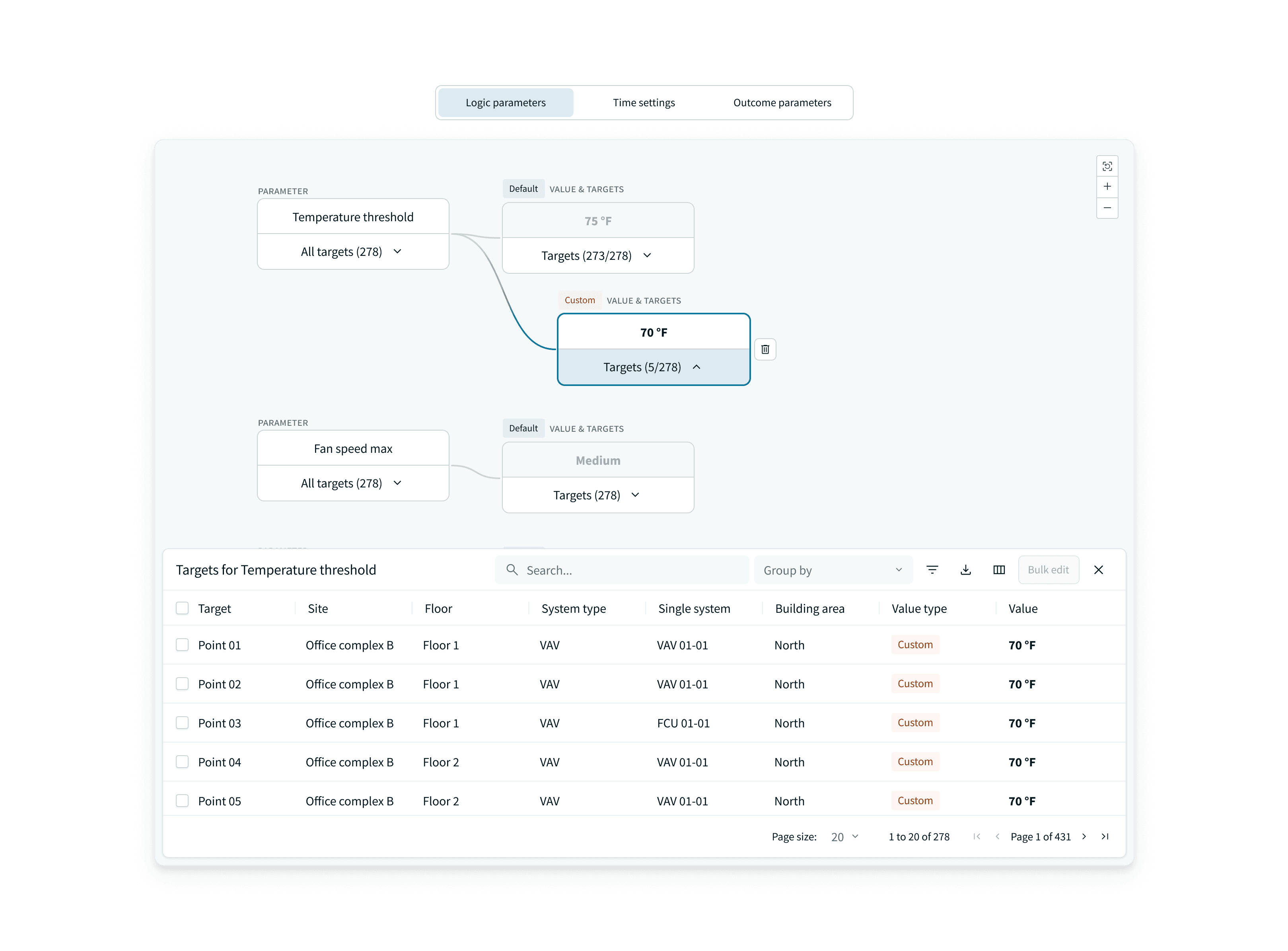
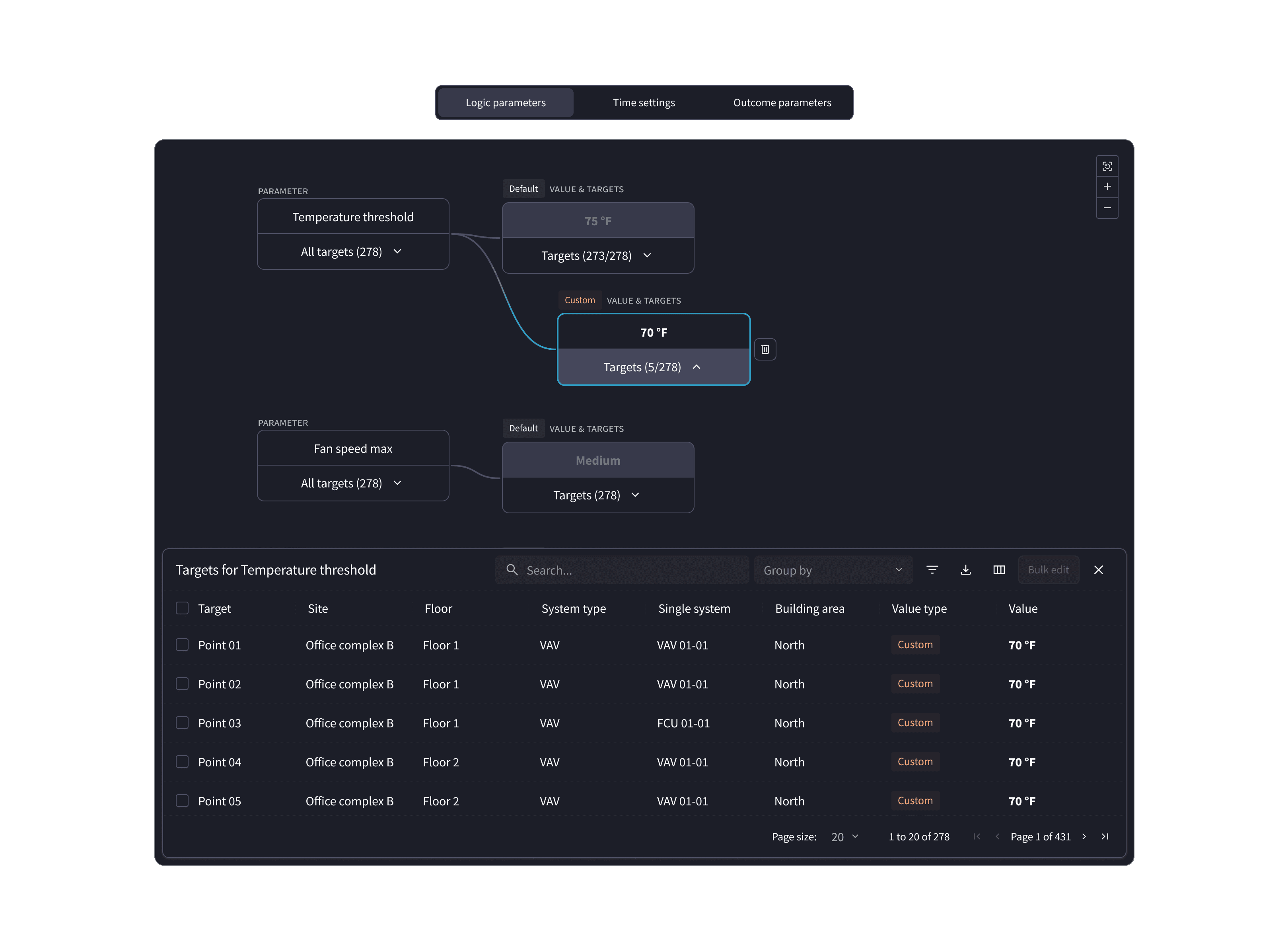
Logic parameters and target values

Rule Parameter Management

Set default and exception values once, then apply them across hundreds of targets.
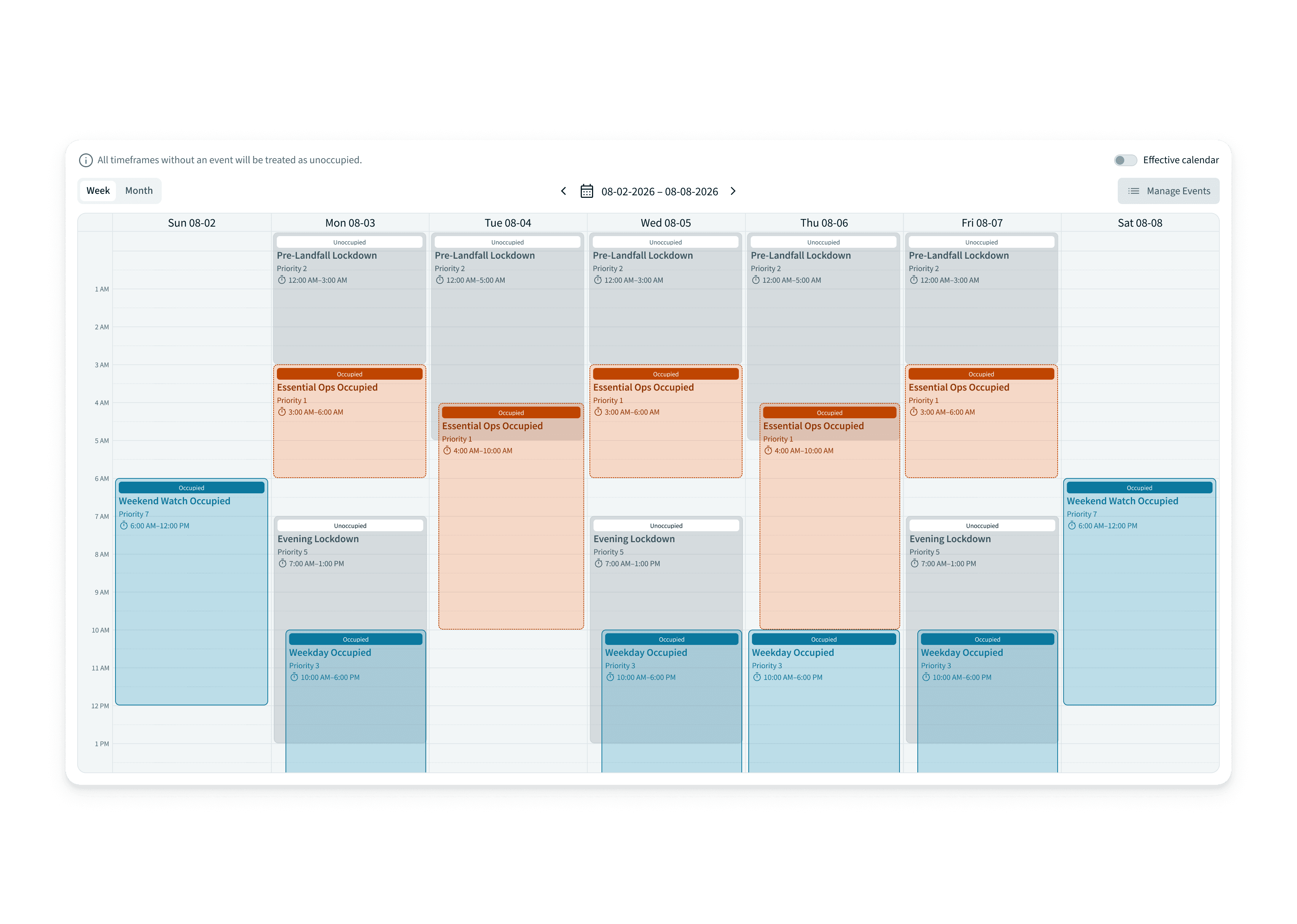
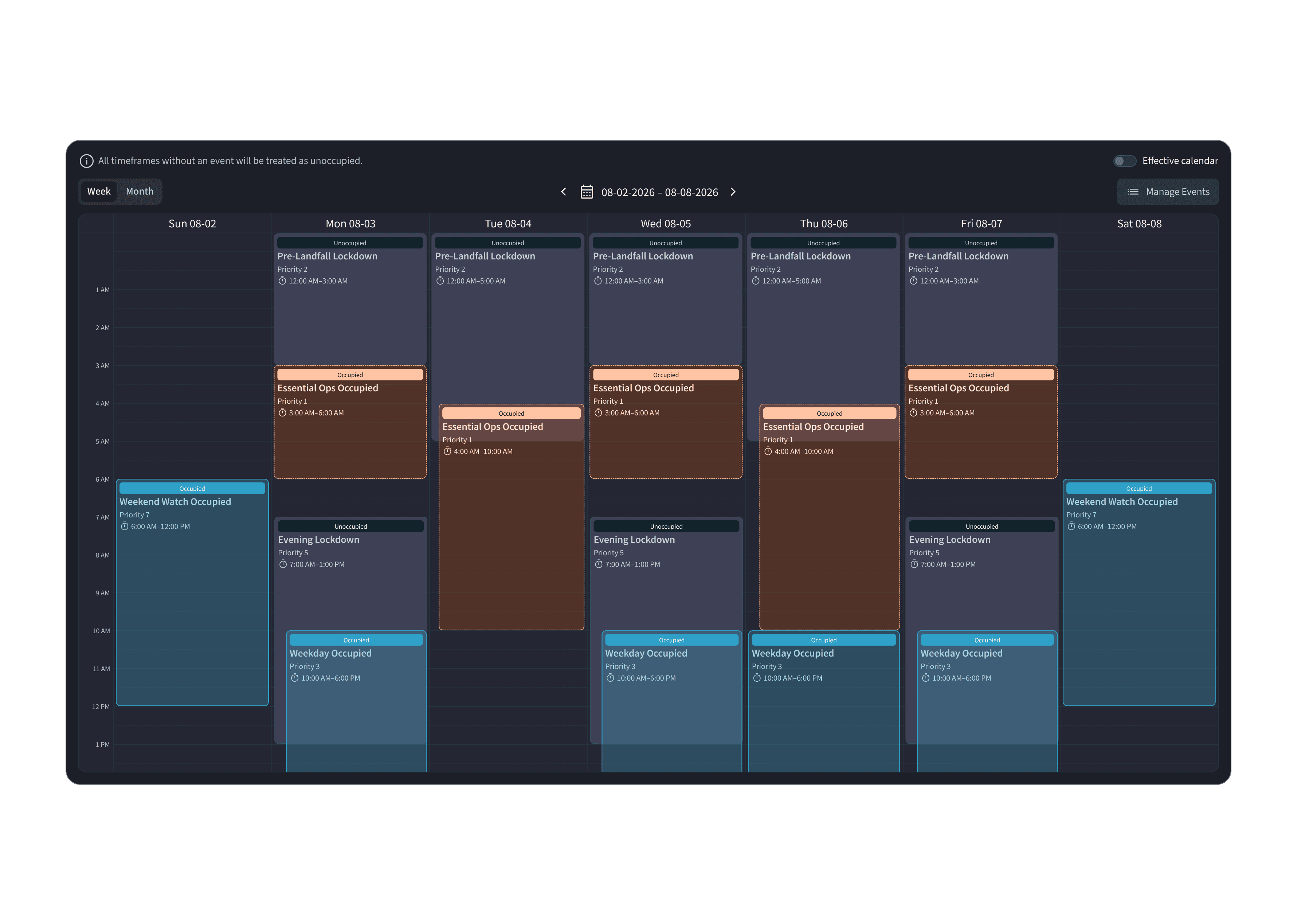
Occupied and unoccupied schedule calendar

Schedule Management

Plan occupied and unoccupied windows on one shared calendar.
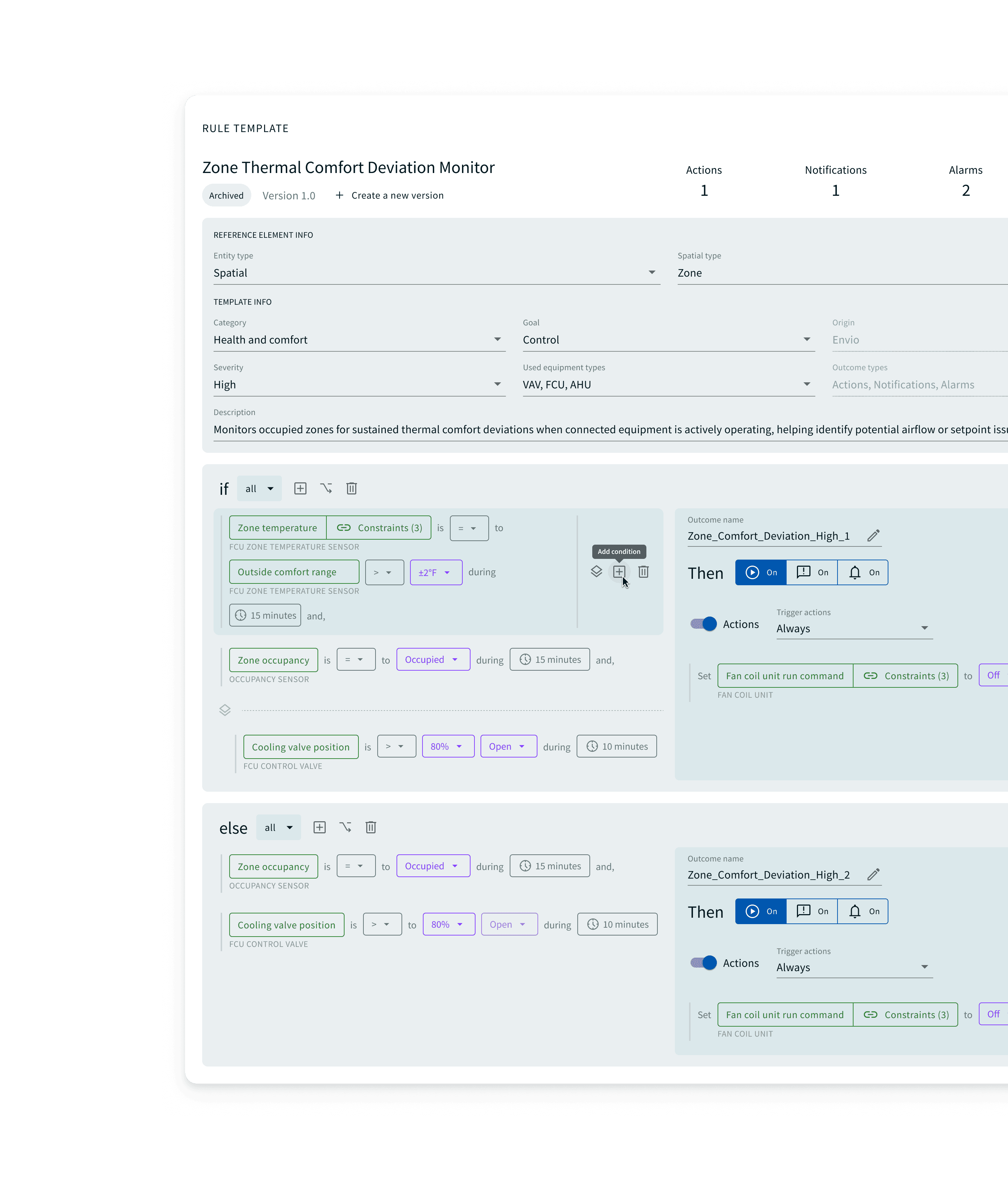
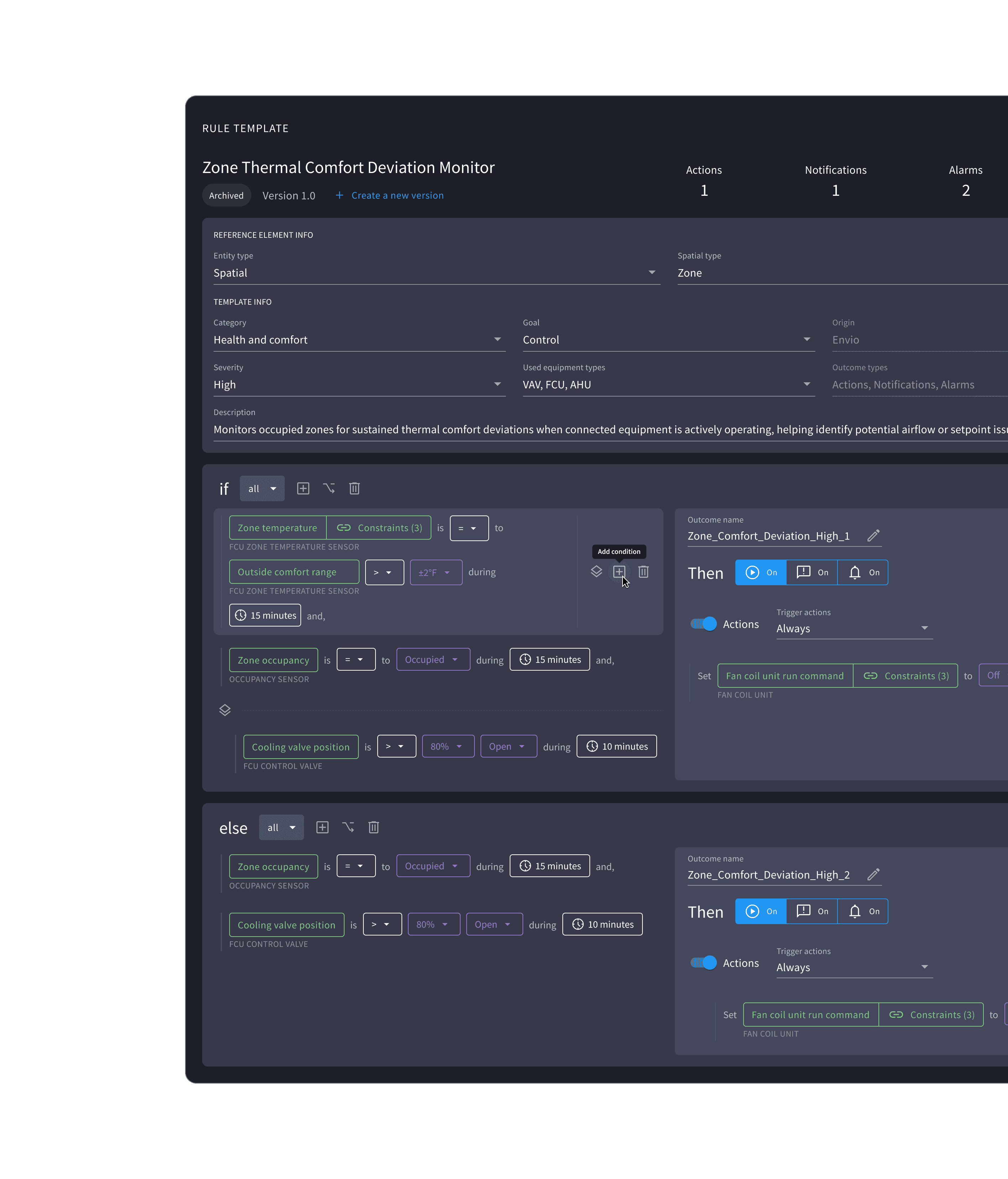
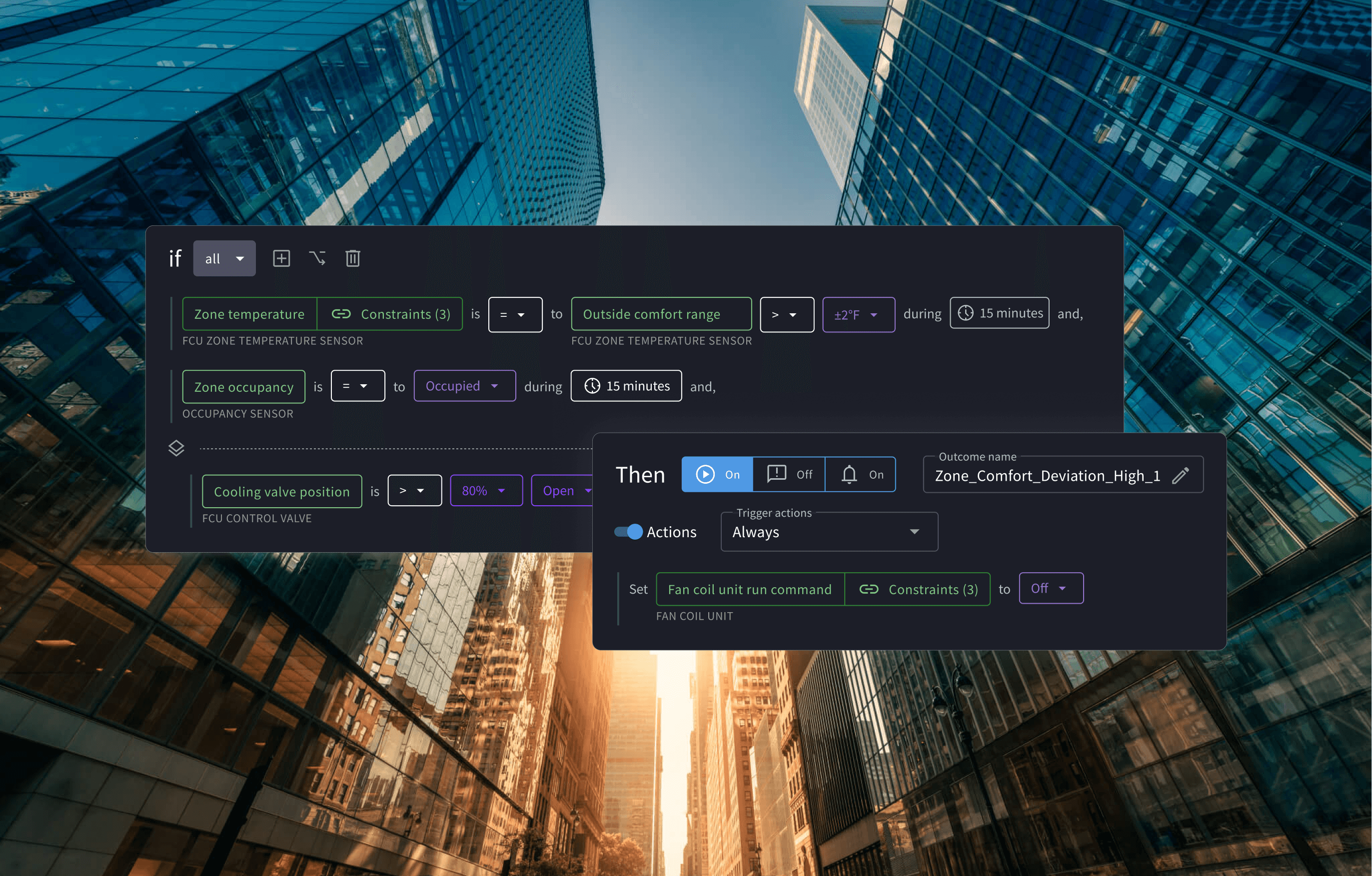
Rule template with if/else logic

Rule Editor

Author reusable if/else templates with actions, alarms, and outcomes.
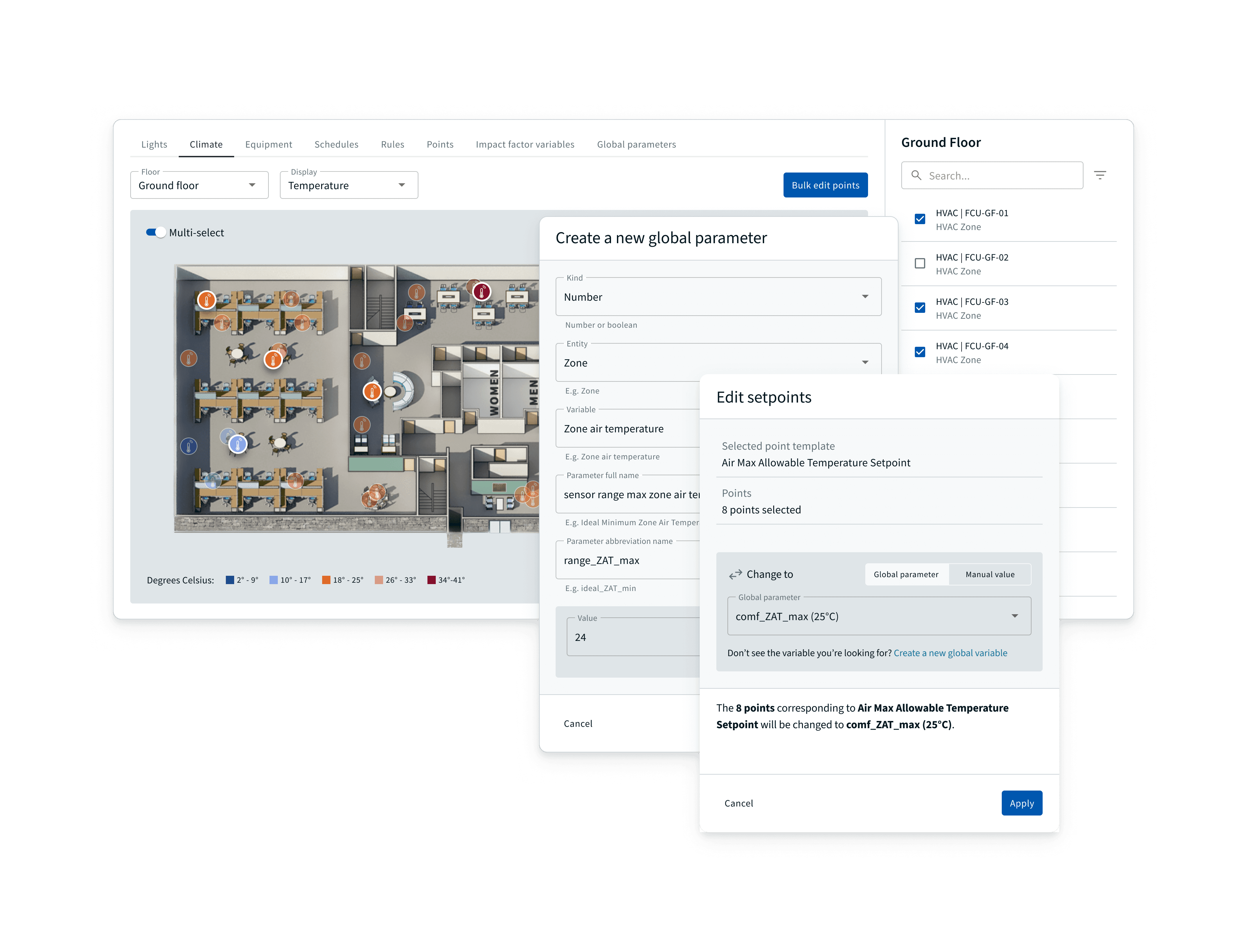
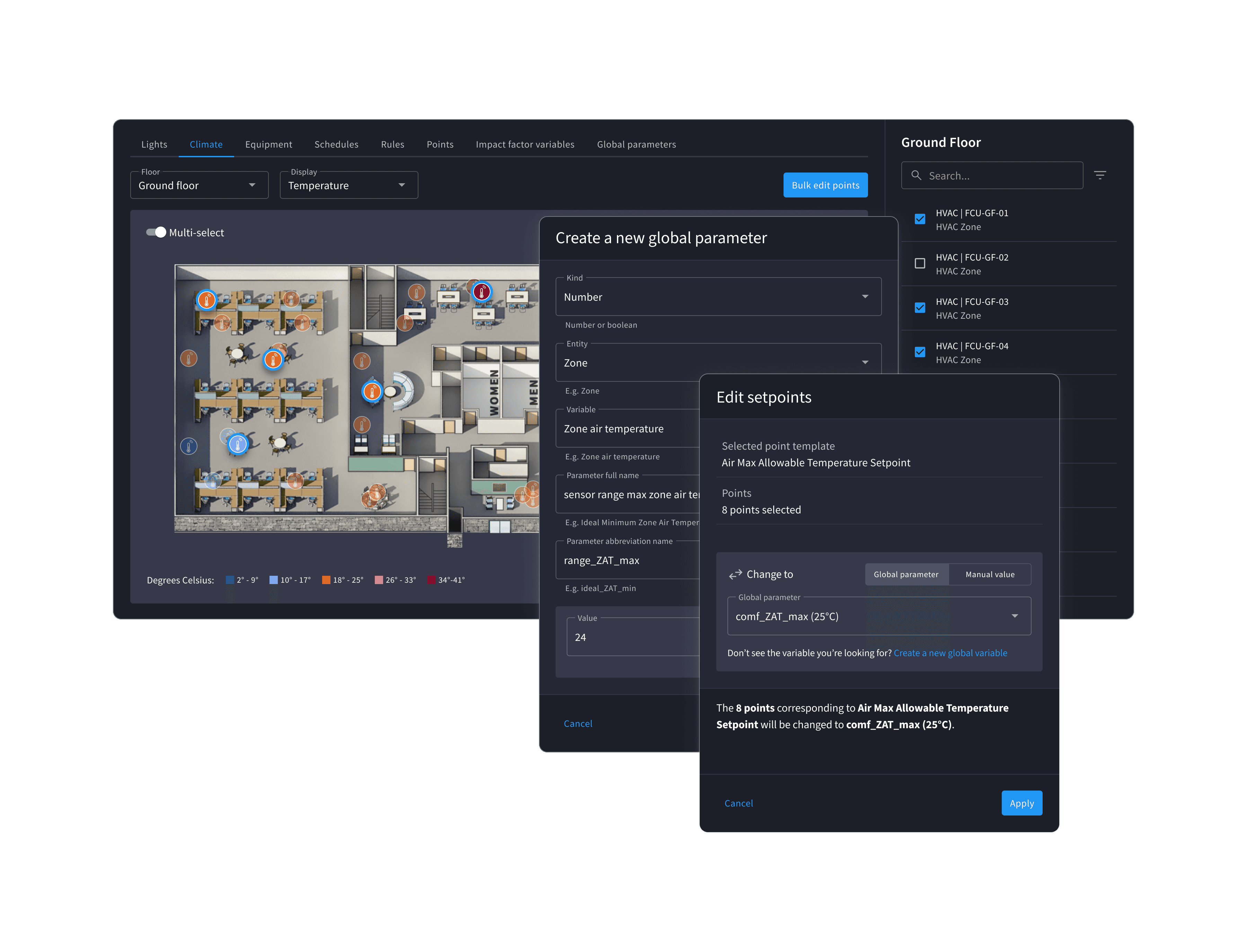
Bulk setpoint editing on a floor plan

Bulk Edit Setpoints

Change many points in one pass from the floor plan or a global parameter.

Simplifying Automation Configuration at Scale

Automation UXB2B SaaSRules & Logic DesignSystem Scalability

Evolved automation configuration across two product generations, turning separate scheduling, rule, parameter, and bulk-edit workflows into one scalable system.

Role

Product Design Lead

Product Name

JLL Envio JLL Smart Building Platform 2.0

Collaborated with

Product Management, Engineering, Operations, and platform product teams

Timeline

Mar 2024 to Aug 2025, Envio Sep 2025 to Jul 2026, SBP 2.0

Deliverables

Automation strategy, schedule management, rule architecture, parameter configuration, bulk actions, governance, and platform migration

Problem Statement

  • Automation capabilities had grown independently across schedules, rule parameters, rule management, and bulk setpoint editing in Envio.
  • Operators had to move between disconnected workflows and repeat manual configuration, making it difficult to apply consistent control strategies across multiple buildings.

Context

  • The work began as a series of workflow improvements in Envio. As common patterns emerged, I reframed the projects as one automation system rather than separate feature updates.
  • During the transition to Smart Building Platform 2.0, I carried those learnings forward into a unified configuration model designed for broader workflows, stronger governance, and portfolio-level scale.

Responsibilities & Contributions

  • Connected work across two product generations: Identified shared patterns across Envio initiatives and translated them into a unified automation strategy for Smart Building Platform 2.0.
  • Defined a common configuration model: Connected schedules, parameters, rules, and bulk setpoints through reusable concepts and consistent interaction patterns.
  • Created scalable rule architecture: Designed templates, instances, parameter inheritance, and approval states that separated shared logic from building-specific configuration.
  • Designed portfolio-level controls: Enabled operators to apply schedules, parameters, and setpoint changes across multiple buildings and assets.
  • Protected continuity during migration: Preserved critical Envio workflows while simplifying the product model and establishing a foundation that Smart Building Platform 2.0 could extend.

Impact

2 product generations

Carried automation patterns from Envio into the Smart Building Platform 2.0 foundation.

4 workflows unified

Connected schedules, parameters, rule management, and bulk setpoint editing within one configuration model.

1 reusable rule architecture

Standardized templates, instances, parameters, and approvals for scalable automation.

Portfolio-level configuration

Replaced repeated asset-by-asset changes with reusable rules and controlled bulk actions.

Key Insights

  • Product migration is an opportunity to consolidate the product model, not simply reproduce existing features. The transition succeeded when we preserved user intent while removing legacy fragmentation.
  • Platform consistency does not mean identical workflows. Shared concepts and interaction patterns created coherence while still supporting differences in operational complexity.

Critical Constraints

  • Automation ranged from simple schedules to multi-condition rules with timing, dependencies, and cascading effects.
  • Because changes could affect live equipment, visibility, approval, and recovery were more important than reducing every interaction to the fewest possible steps.
View Full Case Study
Previous
Next